How Document Scanning Boosts Compliance and Saves Space
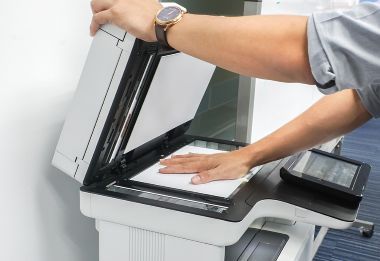 Paper files consume valuable real estate in your office. Document scanning converts those stacks of paper into digital files, freeing up space while simultaneously improving your ability to meet regulatory requirements. Businesses throughout California’s Central Valley are discovering that digital transformation isn’t just about modernization. It’s about operational efficiency and risk management.
The average filing cabinet occupies nine square feet and holds approximately 10,000 pages. Multiply that by the dozens of cabinets most organizations maintain, and you’re looking at significant square footage dedicated solely to paper storage. That space costs money in rent, utilities, and lost opportunities for productive use.
Compliance Benefits of Digital Document Management
Regulatory compliance has become increasingly complex across industries. Healthcare organizations must navigate HIPAA requirements, while financial institutions face scrutiny under SOX and GLB regulations. Legal firms manage discovery obligations and retention schedules that span decades.
Document scanning addresses these challenges through several mechanisms. Digital files include metadata that tracks access, modifications, and retention dates. Your team can implement automated retention policies that flag documents for review or destruction according to regulatory timelines. This systematic approach reduces the risk of premature destruction or excessive retention, both of which create liability.
Audit trails become comprehensive when documents exist digitally. You can prove who accessed which file and when, a requirement that’s nearly impossible to satisfy with paper records. During audits or legal proceedings, this documentation protects your organization from claims of tampering or unauthorized access.
Space Savings That Impact Your Bottom Line
The physical footprint reduction from scanning services delivers immediate financial benefits. Consider these practical advantages:
- Elimination of onsite filing cabinets frees space for revenue-generating activities or personnel
- Reduction in offsite storage fees when you transition from physical to digital archives
- Decreased need for warehouse or storage room square footage in lease negotiations
- Lower costs for climate control in areas previously dedicated to paper storage
- Reduced spending on filing supplies, folders, labels, and storage boxes
- Minimized risk of expanding into larger facilities to accommodate growing paper volumes
- Improved office aesthetics and workspace functionality for employees
Organizations in Sacramento, Fresno, Modesto, and Stockton report reclaiming hundreds of square feet through document scanning projects. That translates to tangible savings on commercial real estate costs throughout the Central Valley.
Security Enhancements Through Digital Conversion
Paper documents are vulnerable to numerous threats. Fire, water damage, theft, and simple misplacement all pose risks to information security. Digital files stored with proper backup protocols offer superior protection compared to physical documents sitting in cabinets.
Access controls become granular with scanned documents. You can restrict viewing permissions to specific employees, departments, or roles. Paper files lack this precision. Anyone with physical access to a filing room can potentially view confidential information.
Data protection strategies improve dramatically when documents exist in digital format. Backup copies stored in geographically separate locations ensure business continuity even after catastrophic events. Paper files destroyed in a disaster are often lost permanently.
Implementation Considerations for Your Organization
Successful document scanning requires planning. Begin by identifying which documents demand immediate digitization based on access frequency and compliance requirements. Healthcare organizations might prioritize patient records, while legal firms focus on case files with active litigation.
Partner with providers who understand your industry’s specific compliance needs. Our team brings expertise in HIPAA, SOX, and GLB compliant solutions, ensuring your digital files meet regulatory standards from day one. We’ve served businesses throughout the Central Valley for generations, building a reputation for dependable service and personalized support.
The combination of space savings and compliance benefits makes document scanning a strategic investment rather than a simple technology upgrade. Organizations that delay digital transformation continue paying premium costs for physical storage while accepting elevated compliance risks.
Ready to reclaim your office space and strengthen compliance? Contact us today to discuss how document scanning fits your business needs. Call us at (800) 685-9034 or complete the form on this page.
Frequently Asked Questions
How long does a typical document scanning project take?
Project duration depends on volume and document complexity. Most standard projects involving 10,000 to 50,000 pages complete within two to four weeks. We provide detailed timelines during consultation based on your specific requirements and whether you need onsite or offsite scanning.
Can document scanning help us meet specific industry compliance requirements?
Yes, professional document scanning enhances compliance across regulated industries. Digital files support HIPAA requirements for healthcare organizations, SOX mandates for financial institutions, and retention schedules for legal firms. Proper implementation includes audit trails, access controls, and automated retention policies that simplify regulatory adherence.
What happens to our paper documents after they’re scanned?
After scanning and quality verification, you choose the disposition of original documents. Options include secure shredding for documents without permanent retention requirements, returning originals to your custody, or continued storage in our facilities. We follow your retention policies and regulatory obligations when recommending appropriate next steps.
How much office space can we realistically reclaim through document scanning?
Space savings vary by organization, but most businesses reclaim 50 to 200 square feet per 100,000 pages scanned. A typical four-drawer filing cabinet occupies nine square feet and holds approximately 10,000 pages, so converting 100,000 pages eliminates roughly ten cabinets and frees 90 square feet of valuable office space.
Is document scanning secure for confidential business information?
Professional scanning services provide superior security compared to paper storage. Digital files receive encryption, granular access controls, and comprehensive audit trails. Our facilities maintain strict security protocols including background-checked staff, surveillance systems, and compliance certifications. Backup copies in geographically separate locations protect against data loss from disasters.